Electricity Basics: Voltage, Current, and Resistance
Beginner-friendly overview of V, I, and R with simple examples, common mistakes, and next-step tools.
These guides are written for homeowners, apprentices, and electricians who want the reasoning behind the numbers, not just a result. Each one pairs with a calculator on this site so you can check your work and understand what you are actually solving for.
New here? Start with one of these:
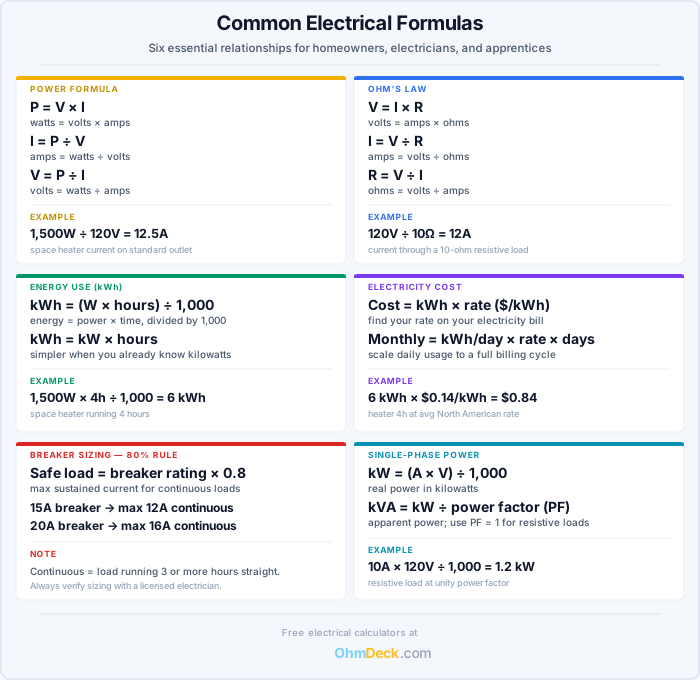
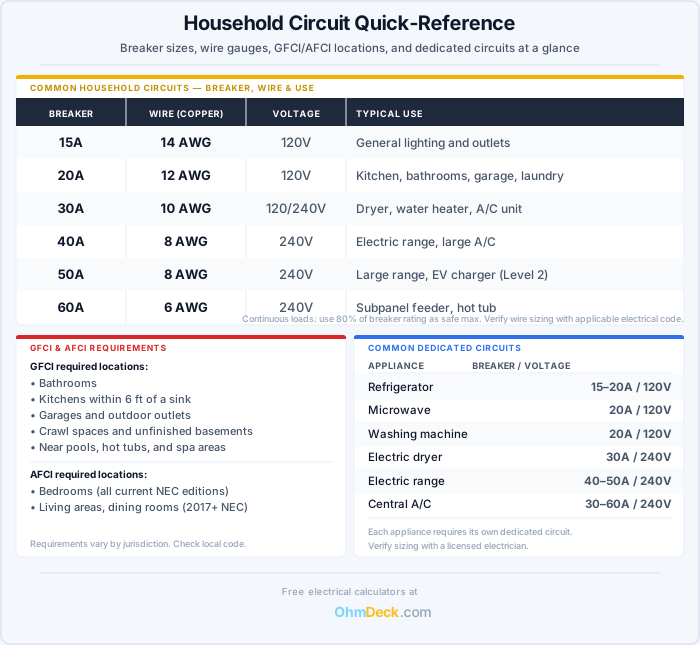
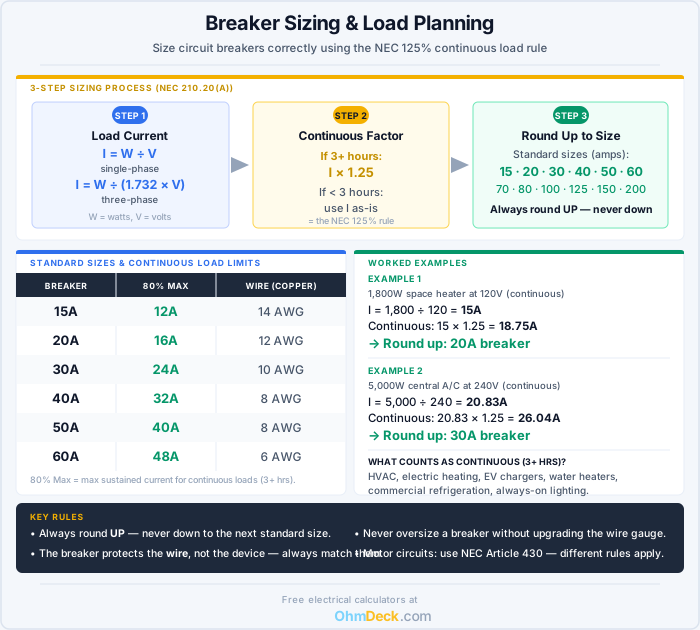
These reference sheets are embedded in their guide pages and available to save or print. Each one is a single SVG file that stays readable at any size.
| Reference Sheet | What it covers | Download |
|---|---|---|
| Common Electrical Formulas Cheat Sheet | Power formula, Ohm's Law, energy (kWh), cost, breaker 80% rule, and single-phase power in one reference card. | Download SVG |
| Household Circuit Quick-Reference | Breaker sizes 15A–60A with wire gauges and typical uses, GFCI & AFCI required locations, and common dedicated circuit requirements. | Download SVG |
| Breaker Sizing & Load Planning | 3-step NEC sizing process, standard breaker sizes with 80% continuous limits, worked examples, and key rules. | Download SVG |
Use these quick guides for formula-level checks and practical electrical calculation context.
Beginner-friendly overview of V, I, and R with simple examples, common mistakes, and next-step tools.
Simple voltage math with step-by-step examples and common pitfalls.
Use Ohm’s Law to estimate amps with quick examples and safety-first context.
Learn basic resistance calculations and what the numbers mean.
Quick 120V vs 240V current estimates with practical safety-first planning notes.
Formula-based watts estimate plus a practical planning margin example.
Fast current estimate guide with label-plate and shared-circuit reminders.
Simple amp calculations for small devices and multi-load planning checks.
Why watts “feel heavier” at 12V, with real examples and wiring/voltage-drop notes.
Fun beginner guide to 15A vs 20A vs 30A breakers, watt math, and wire safety context.
It looks heavy-duty, but is it safe? Learn what the “T-slot” implies and what to do instead.
Common wire size starting points for 50A subpanels, plus distance/voltage drop tips and safety notes.
Common starting points for 32A, 40A, and 48A home charging, plus the distance checks that can change the wire.
Short-run rule of thumb, longer-run caveats, and when a 40A answer grows to the next conductor size.
A practical guide to 60A wire sizing for feeders, chargers, and other higher-load homeowner projects.
Why voltage drop changes wire-size answers on longer runs to garages, sheds, chargers, and workshops.
The continuous-load rule in plain English, with the common 40A charger to 50A breaker answer.
A practical homeowner look at spare capacity, smaller chargers, load management, and upgrade pressure.
Formula, worked examples at 120V/240V/12V, reference table, and FAQ for converting watts to amps.
Multiply amps by voltage to get watts, with examples, a reference table, and circuit planning context.
Single-phase kVA to amps conversion with generator and UPS examples, reference table, and FAQ.
kW to amps with water heater, range, and EV charger examples, plus the 80% continuous load rule.
The three main causes, overload, short circuit, ground fault, with a quick diagnostic table and FAQ.
Short-run versus long-run cord choices for real 15A temporary loads, with practical 14 AWG, 12 AWG, and 10 AWG planning ranges.
Why 12 AWG is the common short-run answer for 20A loads, and when 10 AWG or a different approach is smarter.
A practical safety-first answer for heater cords, with the rare short heavy-cord exception and the better alternatives.
Why 100-foot runs often change the cord-gauge answer, especially on 120V tools, heaters, and motor loads.
Why wire gauge matters more than the breaker, and what to check before making any changes.
120V vs 240V, one slot vs two, and which loads need which type, with a comparison table and FAQ.
Where to look: nameplate, EnergyGuide label, spec sheet, or plug-in energy monitor, and what to do when the wattage is not listed.
Why refrigerators, freezers, sump pumps, and AC units can need much more generator headroom at startup than they do once running.
Practical fridge-backup starting ranges, compressor startup context, and when a small generator is too tight.
Combined cold-storage planning with startup-overlap risk, comparison table, and generator-sizing next steps.
Motor-starting reality for basement backup, with practical generator starting points for common pump sizes.
kWh, rate, fixed charges, and line items explained, plus how to calculate your own bill estimate.
Ontario-focused bill guide: TOU vs ULO vs Tiered plans, delivery/regulatory lines, and practical bill-estimate workflow.
Ontario high-bill troubleshooting guide: billing days, plan fit, heating, EV charging, and where the extra total usually comes from.
BC-focused hydro bill guide: tiered vs flat rate, time-of-day pricing, common line items, and what usually makes the total jump.
Alberta-focused bill guide: retailer vs distributor, Rate of Last Resort, delivery charges, and how to compare one bill to the last one.
Quebec-focused hydro bill guide: Rate D tier split (40 kWh/day), system access charge, and monthly estimate steps.
Quebec high-bill troubleshooting guide: Rate D threshold pressure, winter heating, billing days, and what usually changes first.
A troubleshooting checklist for high bills: HVAC, water heating, new appliances, standby loads, and rate changes.
The formula for daily, monthly, and annual cost, with worked examples for a heater, refrigerator, and dryer.
Which devices drain power when "off," how much they cost, and the easiest ways to stop the silent drain.
How peak and off-peak pricing works, which loads are worth shifting, and whether TOU is right for your household.
Disclaimer: Results are informational estimates for learning and planning only. Always follow the applicable electrical code and consult a qualified licensed electrician for safety-critical work.