What Wire Gauge for a 50 Amp Subpanel? Don’t Guess, Plan It Safely
50 Amp Subpanel Wire Gauge (Quick Summary)
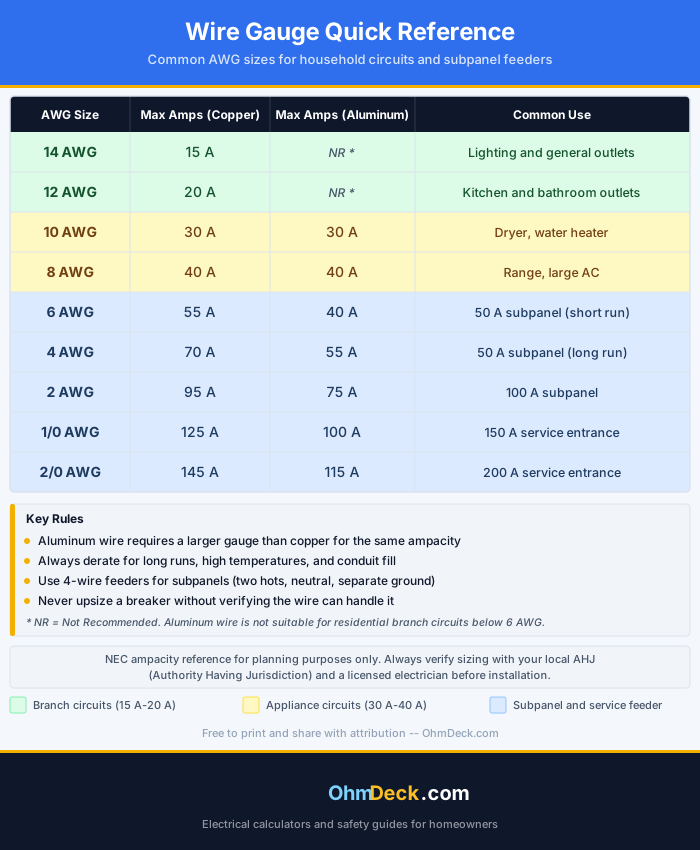
- Common starting point: 6 AWG copper or 4 AWG aluminum is often used for a 50-amp feeder depending on insulation type, terminations, and local code.
- Long runs: For long distances (often ~100 ft+), you may need to upsize (example: 4 AWG copper) to reduce voltage drop.
- Grounding: Use a 4-wire feeder (two hots, neutral, separate equipment ground). Neutral and ground should be isolated in the subpanel.
New to the basics? Start here: Electricity Basics.
Subpanel Secrets – Sizing Your 50A Upgrade
Ready to turn the garage into a workshop? A 50-amp subpanel is the gold standard for running a welder, an EV charger, or a beefy table saw. But you can't just use any wire; you need a "pipe" big enough for that electricity to flow.
The quick answer (the “pipe size” version)
Many installs start at 6 AWG copper (or 4 AWG aluminum) for 50A, but verify before buying wire or pulling a feeder.
Exact sizing depends on distance, install conditions, and local code.
Why wire gauge matters (aka: heat + voltage drop)
Wire gauge controls how much current the feeder can carry without excessive heating. If the wire is undersized, resistance is higher, heat rises faster, and more voltage is lost before power reaches your subpanel loads.
The big factors that change the wire size
1) Distance (voltage drop: when power ‘gets tired’)
As feeder length increases, resistance adds up and delivered voltage at the subpanel can drop. That is why longer runs often justify upsizing conductors.
Rule-of-thumb note: Many people aim for ~3% feeder drop, but code and design goals vary.
2) Installation conditions (conduit, attic heat, burial)
Hotter environments and crowded conduit can lower allowable ampacity, which may change the conductor size you need. Install method and conditions matter just as much as breaker size.
3) Copper vs aluminum (cost vs size)
Aluminum can be a cost-friendly option, but it often needs a larger gauge than copper for similar current. Correct lugs, listed terminations, and anti-oxidant are often part of aluminum feeder best practices.
The 4-wire feeder and subpanel neutral/ground separation
A typical subpanel feeder uses two hot conductors, one neutral, and a separate equipment grounding conductor. Neutral and ground are separated in the subpanel so return current stays on neutral while the equipment ground remains a dedicated fault path.
Common mistakes (avoid the magic smoke)
- Using 3-wire feeder
- Bonding neutral + ground in subpanel
- Not accounting for distance
- Wrong lugs for aluminum
Next steps (tools + links)
Use this as a sanity-check, then confirm with local code/inspector/electrician.
FAQ
1) Is 6 AWG copper always enough for a 50 amp subpanel?
Not always. It is a common starting point for many 50A feeders, but final sizing can change with insulation rating, terminations, run length, temperature, and local requirements. Treat it as a planning baseline, not an automatic answer.
2) When should I upsize feeder wire for voltage drop?
Upsizing is commonly considered on longer runs, especially as current demand stays high. If feeder distance grows, voltage drop can become more noticeable at loads. A larger conductor can reduce resistance and help maintain voltage at the subpanel.
3) Can I use aluminum wire for a 50 amp subpanel?
Yes, aluminum is often used for feeders when installed correctly. It typically requires a larger gauge than copper for comparable current capacity. Use listed connectors and terminations suitable for aluminum conductors.
4) Do I need 3-wire or 4-wire for a subpanel feeder?
Modern subpanel feeders are commonly 4-wire: two hots, one neutral, and one equipment grounding conductor. This supports proper separation of neutral and grounding functions in the subpanel. Confirm exact requirements with your local authority and current code.
5) Should neutral and ground be bonded in a subpanel?
In typical subpanel setups, neutral and ground are kept separate. Bonding is generally done at the service equipment, not downstream subpanels. Verify local inspection expectations before finalizing your panel configuration.
Disclaimer: Results are informational estimates for learning and planning only. Always follow the applicable electrical code and consult a qualified licensed electrician for safety-critical work.