Time-of-Use Rates Explained
The quick version
- Time-of-use (TOU) pricing charges different rates per kWh depending on time of day.
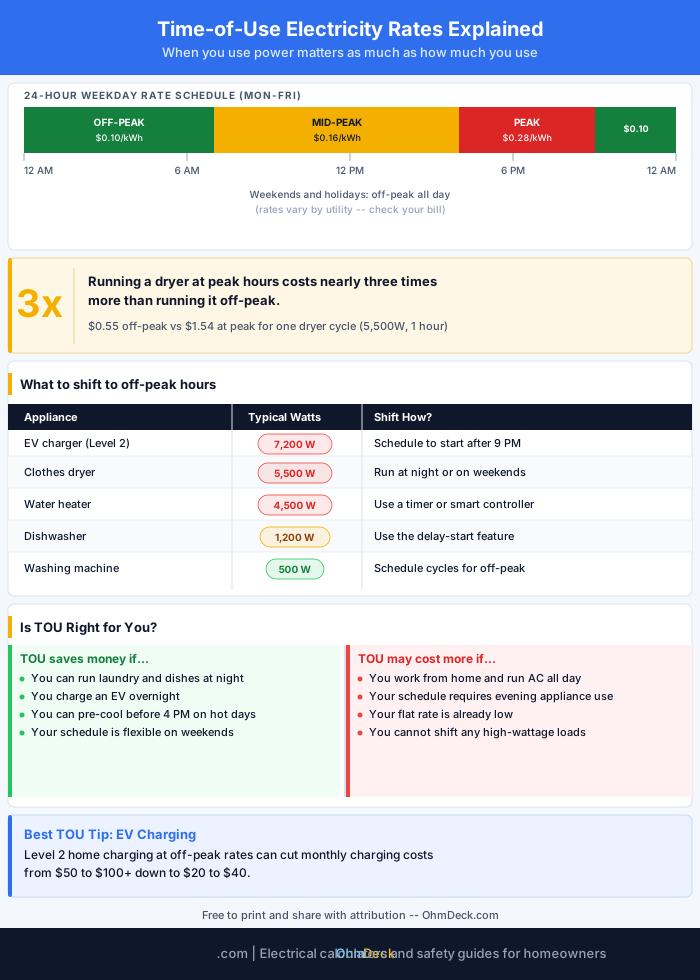
- Peak hours (typically 4–9 PM on weekdays) cost 2–3× more than off-peak hours.
- Off-peak hours (nights and weekends) are cheap, often the cheapest electricity you can get.
- Who benefits: households that can shift laundry, dishwasher, EV charging, and water heating to off-peak hours.
- Who doesn't: households with inflexible high-use schedules or those who work from home and use HVAC heavily during peak hours.
What is time-of-use pricing?
A standard flat rate charges the same price per kWh no matter when you use electricity. A time-of-use rate changes that price based on time of day, and sometimes day of week or season.
The logic: electricity grids have peak demand periods when everyone is drawing power at the same time (typically late afternoon and early evening on hot weekdays). Serving peak demand requires utilities to run more expensive "peaker" generation plants. By charging more during peak hours, TOU rates encourage customers to shift usage away from those times, reducing grid stress and the cost of running those plants.
For customers who can shift their heavy loads, TOU rates can significantly reduce bills. For customers who cannot shift, they can increase costs.
How TOU pricing typically works
Your utility defines two or three pricing tiers based on time:
- Peak (on-peak): Highest price per kWh. Typically weekday afternoons/evenings, commonly 4–9 PM, though this varies by utility and season.
- Off-peak: Lowest price per kWh. Typically nights (e.g., 9 PM–7 AM) and all day weekends/holidays.
- Mid-peak (some utilities): An intermediate rate for shoulder hours.
Example rate structure (illustrative, your utility's rates will differ):
| Period | Hours | Rate example |
|---|---|---|
| Off-peak | 9 PM – 7 AM (daily), all weekend | $0.10/kWh |
| Mid-peak | 7 AM – 4 PM weekdays | $0.16/kWh |
| Peak | 4 PM – 9 PM weekdays | $0.28/kWh |
In this example, running a 5500 W dryer for one hour costs $0.55 off-peak but $1.54 at peak rate, nearly three times as much.
Loads worth shifting to off-peak
The savings from TOU pricing come entirely from moving high-wattage, flexible loads to off-peak hours. The key word is "flexible": loads where you can control when they run without significantly affecting your comfort or routine.
| Load | Typical wattage | Shiftable? | Notes |
|---|---|---|---|
| EV charging | 7200 W (Level 2) | Yes, easy | Schedule to start after 9 PM |
| Clothes dryer | 5500 W | Yes | Run at night or on weekends |
| Dishwasher | 1200 W | Yes | Use delay-start feature |
| Washing machine | 500 W | Yes | Schedule cycles for off-peak |
| Water heater | 4500 W | Partially | Timer or smart controller can shift heating cycles |
| HVAC | 1000–4000 W | Partially | Pre-cool before peak; smart thermostat helps |
| Refrigerator | 150 W avg | No | Always-on; cannot shift |
Pre-cooling: a useful TOU strategy
If you have central air conditioning, you can "pre-cool" your home during the cheaper mid-peak hours (before 4 PM), setting the thermostat a degree or two lower than you normally would. When peak hours start, raise the thermostat and let the home's thermal mass absorb the heat slowly. A well-insulated home can coast for 2–3 hours before significant warming occurs, avoiding significant AC runtime during the most expensive period.
This works best with a programmable or smart thermostat that can automatically execute the schedule without you having to remember to adjust it every day.
Is TOU pricing right for you?
TOU pricing tends to save money if you can shift 60–70% of your high-wattage usage to off-peak hours. It may cost more if:
- You work from home and run HVAC heavily during the day and evening on weekdays.
- Your schedule does not allow shifting laundry or dishes to off-peak times.
- You have a baby, elder care, or other needs that require consistent overnight HVAC, though off-peak overnight rates are typically cheap anyway.
- Your flat rate is already relatively low compared to the off-peak TOU rate.
Most utilities that offer TOU rates let you model your usage and estimate whether you would save or pay more before switching. If yours does, run the numbers with a few months of recent bills before committing.
TOU and EV charging
EVs are one of the biggest arguments for switching to TOU pricing if you have or are considering one. Level 2 home charging at 7.2 kW for 2–3 hours per night adds 200–400 kWh per month. At off-peak rates, that charging can cost $20–40/month instead of $50–100+ at flat or peak rates. Many utilities offer EV-specific rate plans with even deeper off-peak discounts to incentivize overnight charging.
Use the Electricity Cost Calculator to estimate EV charging cost at different rates, enter your charger wattage and typical nightly hours.
Related tools and guides
- Electricity Cost Calculator, estimate cost at different rates
- kWh Calculator
- How to Read Your Electric Bill
- Why Is My Electric Bill So High?
- How to Calculate Appliance Running Cost
FAQ
How do I know if I am on a TOU rate?
Check your electric bill; it will list your rate schedule name (something like "TOU-D" or "EV-TOU-2"). If you see time-specific pricing in the rate detail section, you are on TOU. If you just see a single per-kWh rate, you are on a flat rate. You can also check your utility's website under "rate schedules" or call customer service.
Can I switch back if TOU doesn't work for me?
Most utilities allow you to switch rate plans once per year. Check your utility's terms; there may be a waiting period before you can switch back. If you are considering TOU, try it during a month when you can actively shift loads and evaluate whether the savings materialize.
Does TOU pricing apply to solar customers?
Yes, and it can be especially advantageous or disadvantageous depending on your setup. If you have a battery storage system, you can export to the grid during peak (high export rate) and import off-peak (low import rate). Without storage, your panels produce most during midday, which may be mid-peak, not peak, so you may still import power at peak rates in the evening. Ask your utility how TOU interacts with your net metering agreement.
What counts as "peak hours", does it vary?
Yes, peak hours vary by utility, region, and sometimes by season. Summer peaks are often longer (may run from 3 PM to 10 PM in hot climates). Some utilities have different peak hours in winter for heating-heavy areas. Always check your specific utility's rate schedule for your exact peak window, and note whether weekends and holidays are excluded (most TOU plans have off-peak all weekend).
I don't have a smart thermostat. Can I still benefit from TOU?
Yes, the biggest TOU wins come from scheduling appliances, not HVAC. If you run your dryer, dishwasher, and washer at night instead of evenings, and charge an EV overnight, you can capture most of the TOU savings without touching your thermostat schedule. A smart thermostat helps with HVAC optimization but is not required.
Disclaimer: Results are informational estimates for learning and planning only. Always follow the applicable electrical code and consult a qualified licensed electrician for safety-critical work.