Standby Power & Vampire Loads
The short version
- Standby power (also called "vampire load" or "phantom load") is the electricity a device draws when it is plugged in but not actively being used.
- The average US home wastes $100–200 per year on standby loads.
- Worst offenders: cable/satellite boxes, older game consoles, desktop computers left on standby, audio/video receivers, and older TVs.
- Easiest fix: smart power strips or smart plugs that cut power when devices are idle.
What is standby power?
Standby power is the electricity consumed by a device when it is plugged in but not performing its main function. The device is not truly "off"; it is waiting: waiting for a remote control signal, waiting for you to press a button, waiting to display the time, or maintaining a network connection.
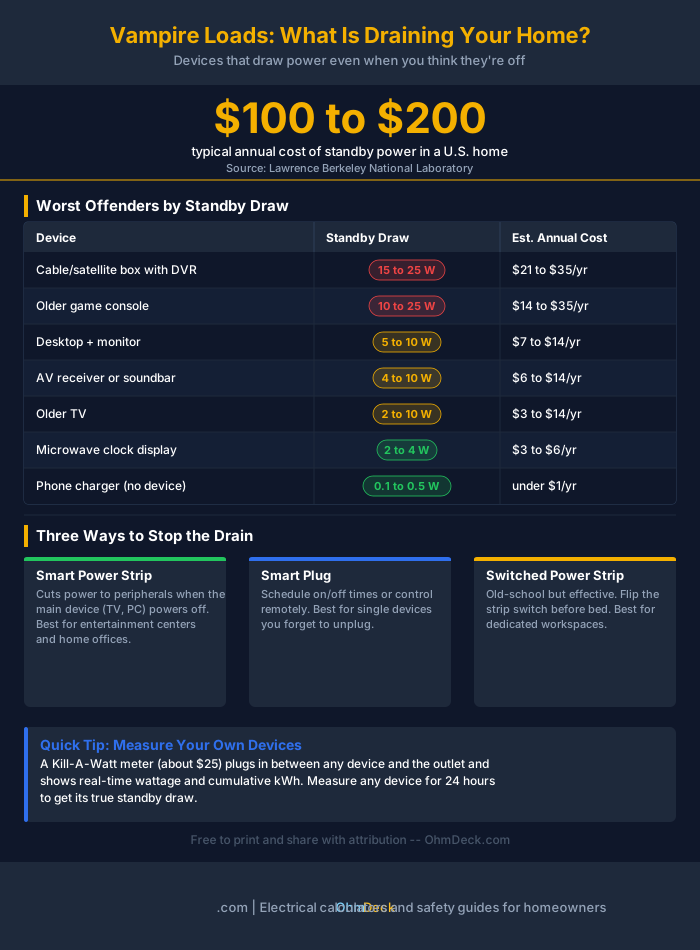
Every watt of standby draw runs continuously, 24 hours a day, 365 days a year. A device drawing just 5 W of standby power uses 43.8 kWh per year, costing about $7 at average US rates. That sounds small for one device, but most homes have 20–50 devices with some standby draw, and several of them are much worse than 5 W.
The worst offenders
| Device | Typical standby draw | Annual kWh (est.) | Annual cost at $0.16/kWh |
|---|---|---|---|
| Cable / satellite box (DVR) | 15–25 W | 130–220 kWh | $21–35 |
| Game console (older, always-on) | 10–25 W | 90–220 kWh | $14–35 |
| Desktop computer + monitor (standby) | 5–10 W | 44–88 kWh | $7–14 |
| AV receiver / soundbar | 4–10 W | 35–88 kWh | $6–14 |
| Older TV (standby) | 2–10 W | 18–88 kWh | $3–14 |
| Microwave (clock display) | 2–4 W | 18–35 kWh | $3–6 |
| Phone/laptop charger (unplugged from device) | 0.1–0.5 W | 1–4 kWh | $0.15–0.65 |
Note: chargers left plugged in without a device attached draw very little. The real standby problem is devices with network connections, remote controls, and displays.
How to find your vampire loads
The best tool is a plug-in energy monitor (like a Kill-A-Watt). Plug the device into the monitor, then put it in its normal "off" or standby state and read the wattage. Do this for every device you suspect.
Prioritize devices that:
- Have a remote control (they must be listening for signals)
- Show a clock, LED indicator, or display when "off"
- Maintain a network connection in standby (streaming devices, game consoles, smart TVs)
- Are always plugged in but rarely used (old printers, VCRs, guest-room TVs)
You can also estimate: turn off everything in the house except essential devices (refrigerator, HVAC), then check your utility's smart meter or count the rotations on your analog meter for 15 minutes. That gives you a rough baseline of your always-on load.
How to stop vampire loads
Smart power strips
A smart (or advanced) power strip automatically cuts power to peripheral outlets when a "control" device (like a TV) goes to standby. The TV powers off, and the strip cuts power to the AV receiver, game console, and cable box. Cost: $20–40, payback period typically under a year for a full AV setup.
Smart plugs
A smart plug lets you cut power to a device on a schedule or remotely via your phone. Useful for devices that do not benefit from a smart strip, like a desktop computer, guest room TV, or game console. You can set it to cut power during sleeping hours automatically. Cost: $10–20 each.
Manual switches and power strips with switches
The simplest and cheapest approach: plug a device into a power strip with a switch, and flip the switch when done. Less convenient than automation, but costs almost nothing and works perfectly. Good for home offices and workshop equipment that is always on a clear "done for the day" schedule.
Replace older devices
Newer devices, especially TVs, game consoles, and streaming boxes, have dramatically lower standby draws than equipment from 5–10 years ago. If you have an older cable box or game console that draws 15–20 W in standby, replacing it can save $20–35/year in standby cost alone, on top of whatever you save in active use efficiency.
Is it worth the effort?
Standby loads are rarely the main reason for a high electric bill; heating, cooling, and water heating dominate for most households. But standby loads are one of the easiest things to address: they run continuously without any value to you, and cutting them requires no changes to your habits once the fix is in place.
A realistic target for a home with older AV equipment and a cable box: $80–150/year in standby savings. For a home with already-modern equipment and no cable box: $20–50/year. Worth doing, but don't expect it to cut your bill in half; for that, look at your HVAC and water heater first.
Related tools and guides
- Electricity Cost Calculator, calculate what standby loads cost per month
- kWh Calculator
- Why Is My Electric Bill So High?
- How to Calculate Appliance Running Cost
- How to Find Appliance Wattage
- Electricity Basics: Voltage, Current, and Resistance
FAQ
How much does standby power cost the average household per year?
Estimates from the Lawrence Berkeley National Laboratory and the EPA put average US residential standby losses at $100–200 per year, or about 5–10% of a typical home's electricity bill. The range is wide because it depends heavily on how many devices you have and how old they are.
Is it bad to unplug devices completely?
For most devices, no, it just stops standby draw. The exceptions: devices that need to maintain settings (some clocks, older stereos) may reset, and devices in network-heavy setups (network-attached storage, smart home hubs) may lose connectivity. For consumer electronics like TVs, game consoles, and chargers, unplugging or cutting power is fine.
My cable box takes forever to restart. Can I still cut standby power?
Some cable boxes and DVRs need to stay powered to download programming guides and record scheduled shows. Check your provider's app, if you have a streaming alternative, switching away from a traditional cable box entirely eliminates one of the worst standby loads in most homes. If you must keep the cable box, at minimum ask your provider for a newer Energy Star certified model.
Do phone chargers use a lot of power when nothing is plugged in?
Modern phone chargers draw less than 0.5 W when nothing is connected, roughly $0.70/year at average rates. This is not worth worrying about for most people. The old advice to unplug chargers came from an era of much less efficient chargers. Focus on higher-draw standby loads like cable boxes and AV equipment instead.
What is Energy Star and does it help with standby?
Energy Star is a certification program (run by the EPA and DOE) that requires products to meet efficiency standards including standby power limits. Energy Star certified TVs must draw under 1 W in standby; monitors under 0.5 W; computers under defined limits by size. If you are replacing electronics, choosing Energy Star certified products reduces standby draw significantly compared to non-certified alternatives.
Disclaimer: Results are informational estimates for learning and planning only. Always follow the applicable electrical code and consult a qualified licensed electrician for safety-critical work.